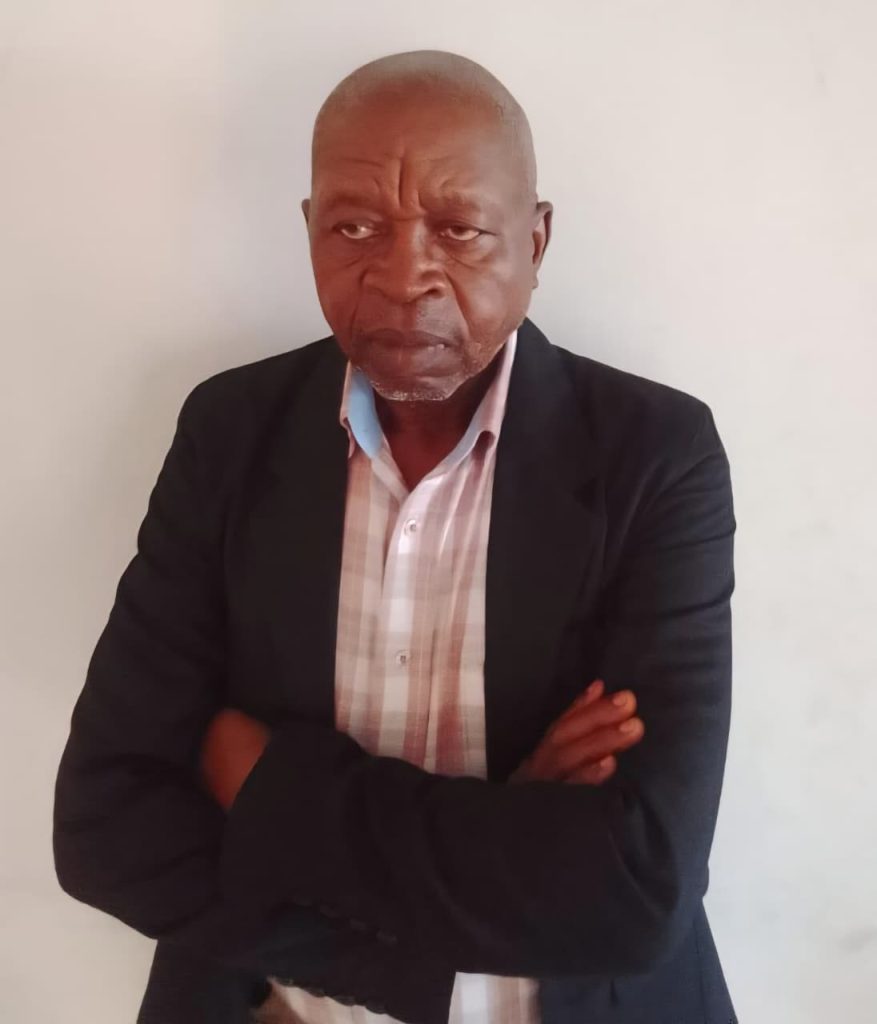
Bonginkosi Paul Mkhize, the son of Frank and Mamane Mkhize, is an ordinary man who has lived an extraordinary life. His is a story of courage, perseverance, and determination in the face of adversity.
With the humble demeanour of an ordinary man from KwaZulu-Natal, he is, however, a trailblazer — a pioneer of Black artisanship in South Africa. Born in Ladysmith, KwaZulu-Natal, Paul completed his early education in the area before matriculating from Ukhahlamba High School in Bergville in 1978.
At that time, Shell Oil South Africa had launched an initiative to recruit capable young Black students into engineering careers, including apprenticeship programmes largely driven by its Durban oil refinery, SAPREF. Paul Mkhize, Lawrence Xaba, and Christopher Luthuli formed part of SAPREF’s first intake of Black apprentices in 1979. They immediately embarked on their journey of learning the trade in SAPREF’s mechanical workshops.
This was during the height of apartheid, and their journey involved challenges far beyond simply mastering a technical trade. At the time, there was no Black artisan in South Africa, and many doubted whether these young apprentices would succeed. The prevailing expectation among some was that they would merely carry toolboxes for white artisans during routine maintenance activities and refinery shutdowns.
The SAPREF refinery, being the largest crude oil refinery in the country at the time, was an enormous and intimidating environment for these ambitious young men who had dared to enter a space where no one from their communities had gone before.
Their colleagues and mentors fell into three broad groups.
The first group consisted of those who genuinely believed that it was time for Black artisans to be trained and who supported Paul and his peers throughout their learning journey. They shared their technical knowledge, skills, and experience, helping them understand the complexities of the trade.
The second group was the Black labour force, largely semi-skilled workers from nearby hostels in Umlazi, Lamontville, and KwaMakhutha. They saw hope in these apprentices and were inspired by the opportunities that the company’s initiative represented for the advancement of Black technical skills.
The third group comprised committed supporters of apartheid who viewed the emergence of Black apprentices with resentment and were unwilling to share their knowledge or support their development.
The SAPREF Training Centre was well-resourced and, under the leadership of Tony Knight, carefully guided the progress of all apprentices, preparing them for the trade test that awaited them at Olifantsfontein in Johannesburg.
Fortunately, SAPREF provided access to a wide range of complex mechanical equipment, including rotating machinery such as centrifugal pumps, steam turbines, and electric motors. This was complemented by exposure to piping systems, various types of valves, boilers, and numerous crude-processing vessels.
The apprentices learned the refinery by bicycle, criss-crossing the vast facility from the southern tank farms, through the crude distillation units, the fluid catalytic cracking unit, and onwards to the bitumen blending plant, lube oil plant, and desulphurisation unit.
In many ways, SAPREF was a haven for any apprentice who genuinely wanted to learn within a complex, disciplined, and world-class engineering environment.
Paul and his colleagues grew in confidence and technical ability, and soon the time came for them to travel by long-distance passenger train to Olifantsfontein in Johannesburg to undertake their trade tests.
The three SAPREF apprentices completed their trade tests, but unfortunately, all three failed on their first attempt. They returned to Durban deeply disappointed and discouraged. The painful reality that some people believed Black South Africans could not become skilled artisans resurfaced because the entire group had not succeeded.
They returned to the training centre, regrouped with their head of training, identified where they had fallen short, and prepared themselves for another attempt.
The SAPREF Training Centre then decided that the apprentices would return to Olifantsfontein individually, and Paul Mkhize was selected as the first to go back.
Being chosen placed a heavy responsibility on the shoulders of the quietly confident young man. When he returned to Olifantsfontein for his second attempt in 1982, he carried with him the hopes of his fellow apprentices, his family, and an entire generation of Black South Africans who were waiting for a breakthrough.
This time, he succeeded.
Bonginkosi Paul Mkhize became the first qualified Black mechanical artisan in South Africa.
In the era before social media and instant communication, news travelled differently. Paul had to return home and personally share the historic achievement with his family and community. When he returned to SAPREF, the news was met with excitement and pride. The achievement was even reported in the Natal Mercury, announcing that South Africa had produced its first qualified Black artisan.
This milestone represented the breaking of yet another barrier imposed by apartheid — a system that had restricted Black South Africans to limited forms of labour and denied them opportunities for technical advancement.
The story of Bonginkosi Paul Mkhize is a testament to courage, resilience, and the power of opportunity. It is also a tribute to the pioneering Black artisans who followed and to organisations such as SAPREF that, despite operating within a deeply unequal system, chose to create pathways for technical development and inclusion.
Although SAPREF has sadly since closed, its legacy remains a shining example of the importance of investing in skills development and creating opportunities for all South Africans.
Long live the spirit of the pioneering Black artisans.
Written by Mlamuli Buthelezi Pr Eng MBL, in his capacity as Past President of the National Society of Black Engineers